Choose the Right Route
Review the trail map and difficulty before leaving. Bluff routes include uneven stone steps, exposed edges, and strenuous climbs; stay on marked trails and keep children close.
Plan a safer visit to Devil’s Lake State Park with guidance for changing weather, difficult terrain, water safety, wildlife, delayed access, and emergencies.
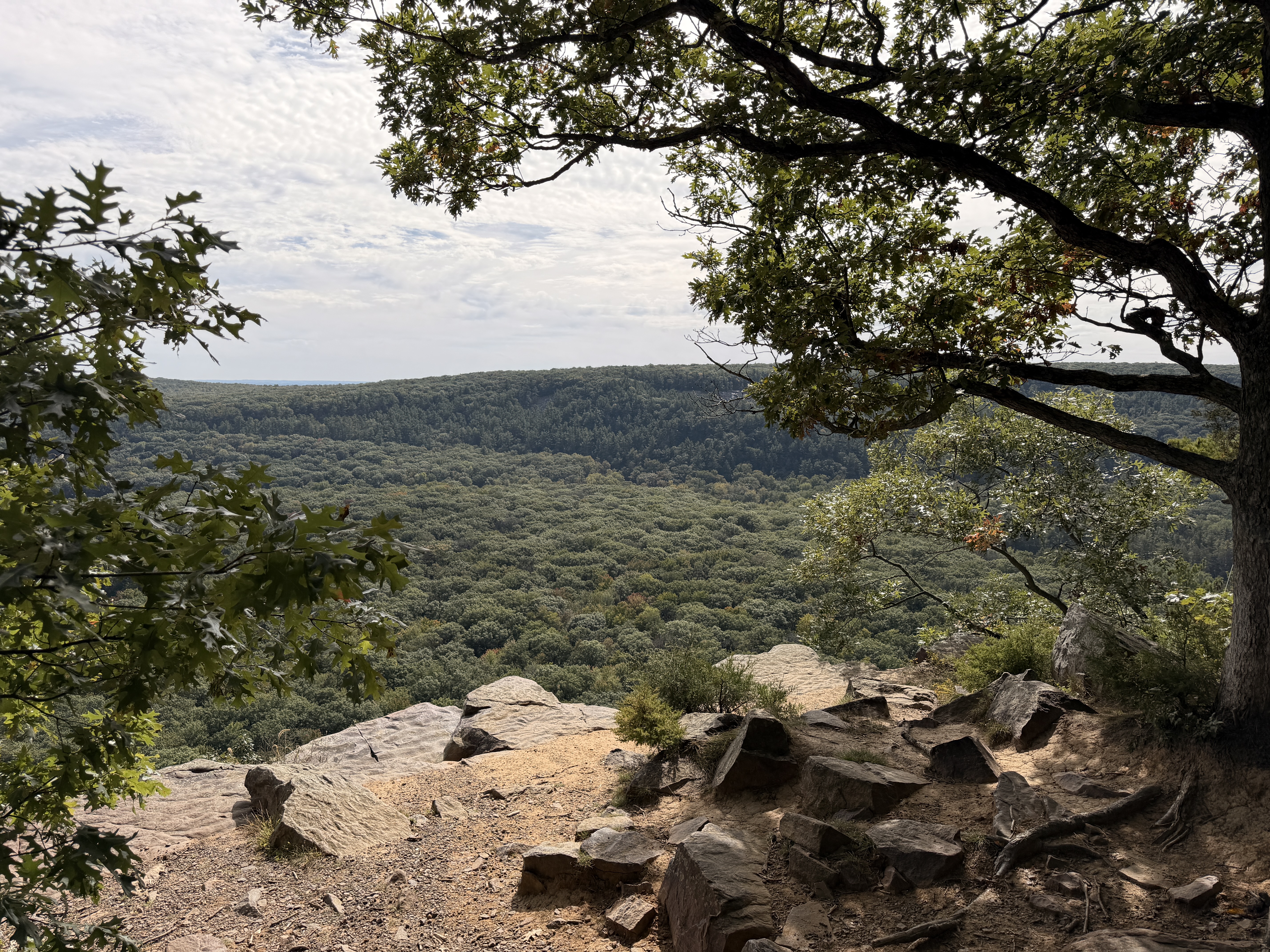
Devil’s Lake State Park surrounds a 360-acre lake beneath 500-foot quartzite bluffs and offers almost 30 miles of trails, beaches, paddling, camping, and year-round recreation.
High visitation, crowded access points, steep terrain, changing weather, and limited access on bluff trails make preparation especially important.
WISCONSIN DNR PARK INFORMATION →Devil’s Lake State Park has 29 miles of trails, from accessible routes to steep, rocky bluff trails rated most difficult. Match the route to your group, the weather, and the time available.
Review the trail map and difficulty before leaving. Bluff routes include uneven stone steps, exposed edges, and strenuous climbs; stay on marked trails and keep children close.
Check current park and weather conditions. Carry water, a map, a charged phone, needed medicine, and a light. Wear sturdy footwear and leave enough daylight for the return.
Call 911. Give the trail name, nearest landmark or intersection, direction of travel, and the person’s condition. Do not move an injured person unless staying in place creates immediate danger.
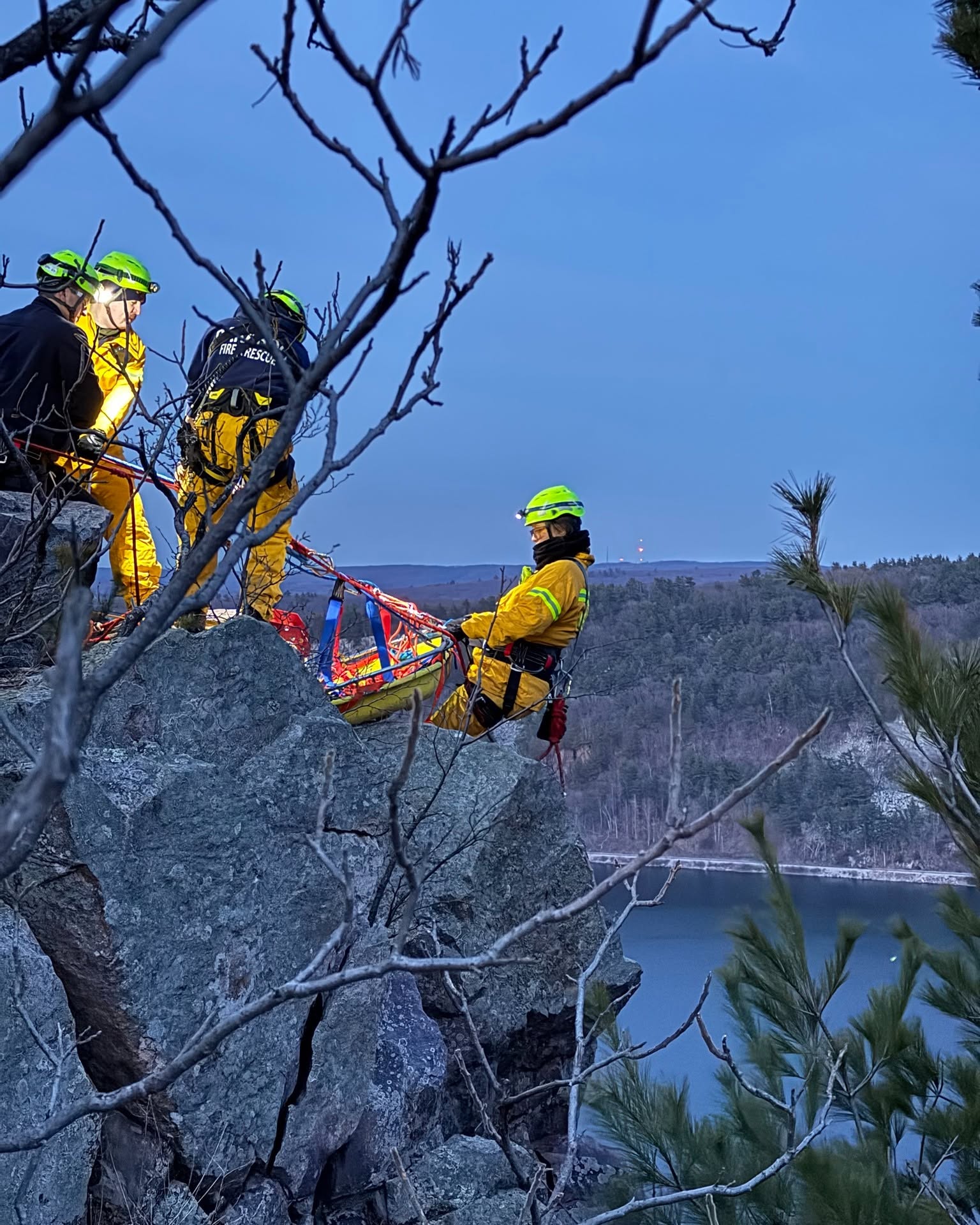
Our fire and EMS crews carry rope-rescue equipment and medical supplies into steep or remote terrain. We stabilize injuries, manage pain, coordinate a controlled carry-out, and continue care on the way to the hospital.
Devil’s Lake visitors should prepare for several recurring health, wildlife, and terrain concerns before arriving.
Check posted signs and current Wisconsin Beach Health advisories before entering the water. Conditions can change quickly, and not every beach is monitored continuously.BEACH CLOSINGS & E. COLI ADVISORIES →
Use repellent, avoid brushing against vegetation, check people after outdoor activity, and remove attached ticks promptly with fine-tipped tweezers.
Stay on marked paths, avoid touching unfamiliar plants, and wash exposed skin and clothing after contact with vegetation.
Timber rattlesnakes live in parts of Wisconsin and may be encountered around rocky bluff habitat. Sightings are uncommon, and snakes generally avoid people, but visitors should stay alert and give every snake room to move away.
Stay on marked trails. Look carefully before stepping over rocks or logs, and never place hands or feet where you cannot see. Keep children close and pets leashed.
Do not approach, touch, trap, or attempt to move a snake. Back away slowly and allow it a clear escape route. Many harmless Wisconsin snakes can also vibrate their tails and sound like a rattlesnake.
Move away from the snake, call 911 immediately, and keep the person calm with movement limited. Remove rings, watches, or tight clothing near the bite before swelling begins.
Do not cut the bite, try to suck out venom, apply ice, use a tourniquet, or attempt to capture the snake. Follow instructions from 911 and responding medical personnel.
The north and south shore beaches are popular places to enter the lake, but there are no lifeguards. Swimmers enter at their own risk, so active supervision and conservative decisions are essential.
Never swim alone, stay close to shore, and keep children and inexperienced swimmers within arm’s reach.
Look for posted beach closures, E. coli advisories, weather changes, and unsafe water conditions. Signs at the beach are the most current source of information.
Swimmer’s itch is reported at Devil’s Lake almost every year, especially in early summer. Follow posted notices, rub briskly with a towel immediately after leaving the water, and shower when possible.
Use a properly fitted U.S. Coast Guard-approved life jacket. Inflatable toys and water wings are not substitutes for supervision or a life jacket.
First call 911 or have someone call. Then attempt to guide the person toward safety with clear instructions. If they cannot reach the shore, use these rescue techniques.
Extend a fishing rod, branch, oar, towel, or other object and pull the person to safety. If nothing is available, lie flat on the dock before reaching for their hand or wrist.
If the person is beyond reach, throw a life jacket or another floating object they can hold onto.
Row toward the person and extend an oar or paddle to help them reach the stern. Have them hold on as you paddle to shore. If they are too weak, support them until help arrives. In a powerboat, stop the engine and glide toward them from downwind.
Go for help. Entering the water can put you in danger and create another person who needs rescue.
The Baraboo Area Fire and EMS District is the local all-hazards agency serving the communities around Devil’s Lake State Park. Our firefighters, rescue technicians, EMTs, and paramedics respond as a coordinated team when visitors, park staff, or nearby residents need help.
The park’s cliffs, trails, water, crowds, and limited access shape who we must be: a locally accountable team that trains for difficult terrain, works closely with Wisconsin DNR park staff, and coordinates with mutual-aid partners when an incident requires more people or specialized resources.
That relationship continues beyond individual calls through joint planning, hands-on training, and familiarity with the park’s access points and changing seasonal risks.